Xuan Zang's Journey to the West
Introduction
"Xuan Zang's Journey to the West" refers to the historical pilgrimage undertaken by the Buddhist monk Xuan Zang during the Tang Dynasty (618-907). This remarkable journey, which spanned from China to India and back, is famed for its extensive contributions to Buddhist scholarship and the cross-cultural exchanges it fostered along the Silk Road. It is also romanticized in the classic Chinese novel "Journey to the West", which is a fictional retelling of Xuan Zang's quest for sacred Buddhist texts. Xuan Zang's travels are not only significant for their religious implications but also for the profound cultural and historical impact they had on the regions he traversed.
Historical Context
Xuan Zang's pilgrimage took place during the Tang Dynasty, a period marked by cultural prosperity and openness in China. The dynasty was known for its advancements in various fields, including art, technology, and trade, which were facilitated by the Silk Road. This ancient network of trade routes connected the East and West, allowing for the exchange of goods, cultures, and ideas. During this era, Buddhism had firmly rooted itself in China, yet the translations of Buddhist scriptures were incomplete and sometimes inaccurate. It was within this context of cultural flourishing and religious inquiry that Xuan Zang embarked on his journey to seek authentic Buddhist teachings directly from their source in India.
Xuan Zang's Early Life
Born in 602 in Henan province, China, Xuan Zang was deeply influenced by Buddhism from a young age. His family had a long-standing Buddhist tradition, which inspired him to pursue monastic life. He became ordained as a monk at the age of thirteen, demonstrating early on his commitment to Buddhist practice and scholarship. Xuan Zang's intellectual curiosity and dedication to Buddhism led him to study various schools of thought, but he found himself dissatisfied with the existing translations of Buddhist texts. This dissatisfaction, coupled with his desire to resolve doctrinal discrepancies, set the stage for his eventual journey to India.
Motivation for the Journey
Xuan Zang's motivation to journey westward was driven by a profound desire to obtain authentic Buddhist scriptures and teachings that were not available in China. He sought to address the inconsistencies and incompleteness in the Chinese translations of Buddhist texts, aiming to bring back accurate translations to enrich and clarify Buddhist practice in China. His journey was not only a religious quest but also an intellectual pursuit to deepen his understanding of Buddhism and aid in its dissemination. The journey was perilous, as it required traversing vast and often hostile territories, but Xuan Zang was determined to fulfill his mission.
Route and Major Stops
Xuan Zang's Journey to the West took approximately 17 years, from 629 to 645. He traveled through the Silk Road, starting from the Tang capital of Chang'an (present-day Xi'an), heading westward to the borders of modern-day Kyrgyzstan, Uzbekistan, and Afghanistan before finally reaching the Indian subcontinent. Major stops along his route included the famed Khotan, the dangerous Pamir Mountains, and the intellectual hub of Nalanda University in India. Nalanda was particularly significant as it was one of the world's first residential universities and a major center for Buddhist learning. Xuan Zang spent several years there, studying under renowned scholars, before returning to China with a wealth of knowledge and numerous sacred texts.
Challenges Faced
Xuan Zang's journey was fraught with numerous challenges, both physical and political. The arduous terrain of the Silk Road presented natural obstacles such as vast deserts, towering mountain ranges, and treacherous weather conditions. Additionally, the political landscape of the regions he traversed was complex, with various warring factions and rulers whose support or opposition could determine the success of his mission. Xuan Zang often had to navigate these political intricacies carefully, securing safe passage through diplomatic means and, at times, sheer determination. Despite the hardships, his unwavering faith and resolute purpose saw him through the journey, allowing him to return to China with over 600 Buddhist texts.
Contributions to Buddhism
Upon his return, Xuan Zang's contributions to Buddhism in China were profound. He established a significant translation project at the Daci'en Temple in Chang'an, where he worked diligently to translate the Buddhist texts he had acquired. His translations were noted for their accuracy and clarity, significantly enriching Chinese Buddhism's textual resources. Xuan Zang's work laid the foundation for the establishment of the Faxiang school, a major Buddhist philosophical tradition. His translations also fostered a deeper understanding of Mahayana Buddhism and its practices, influencing Chinese Buddhism's development for centuries to come.
Cultural Impact
Xuan Zang's journey had a lasting cultural impact that extended beyond religious boundaries. His travelogue, the "Great Tang Records on the Western Regions", provided a detailed account of the regions he visited, offering invaluable insights into the geography, culture, and societies of Central Asia and India during the 7th century. This work became an essential reference for future travelers and historians. Xuan Zang's journey also symbolized the spirit of cultural exchange and understanding, as it facilitated the assimilation and adaptation of Indian Buddhist practices into Chinese culture, enriching its spiritual and philosophical landscape.
Legacy
The legacy of Xuan Zang's journey endures in both historical and cultural contexts. His dedication to Buddhist scholarship and his successful pilgrimage made him an iconic figure in the annals of Chinese history. Xuan Zang's life and journey inspired countless generations, serving as a testament to the pursuit of knowledge and truth. His story has been immortalized in various forms of art, literature, and folklore, underlining his enduring influence on Chinese culture and Buddhism as a whole. The narrative of his journey continues to resonate today, symbolizing the timeless quest for enlightenment and understanding.
Representation in Literature and Media
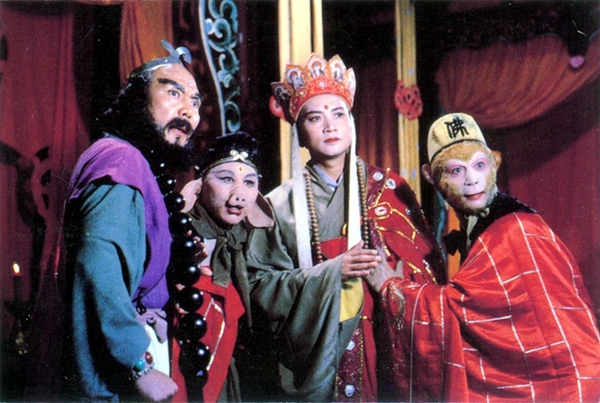
Xuan Zang's journey has been vividly captured in the classic Chinese novel "Journey to the West", written by Wu Cheng'en during the Ming Dynasty (1368-1644). The novel is a fictional account that blends Xuan Zang's historical journey with elements of mythology and folklore, introducing characters such as the Monkey King, Zhu Bajie, and Sha Wujing. This literary work has become one of the Four Great Classical Novels of Chinese literature and has been adapted into various films, television series, and other media. The story's themes of adventure, perseverance, and spiritual enlightenment continue to captivate audiences worldwide. Photo Gallery(16 pictures)CategoriesHistoryTagCultural Exchange in Ancient TimesCatalogue1. Introduction2. Historical Context3. Xuan Zang's Early Life4. Motivation for the Journey5. Route and Major Stops6. Challenges Faced7. Contributions to Buddhism8. Cultural Impact9. Legacy10. Representation in Literature and Media- - - []








